Movement & training
A weekly movement routine you can keep
You do not need a gym membership or a six-day split to be fit enough for daily life. This page explains how to build a week around strength, mobility, walking and rest — and how to adjust it whether you are starting from zero or already training.
General guidance for adults. Check with a professional if you have an injury or a condition affecting your heart, joints or balance.
What a week holds
Four parts, one repeatable shape
Strength work
Twice a week does it
Walking
Most days, 20–30 minutes
Mobility
Short and daily beats long
Rest days
Where progress is stored
Tap any plate to jump to that part of the routine below.
The four parts of a sustainable week
A workable week usually includes strength work, some cardio, mobility or stretching, and at least one genuine rest day. The amounts do not have to match.
Strength
Two sessions a week. Enough to build and hold muscle as a beginner, and to protect bone as you get older.
2 sessions
Cardio by walking
Brisk walking most days. It fits around work, needs no equipment and counts fully toward your weekly total.
Most days
Mobility
Five to ten minutes daily rather than one long weekend session. Hips, upper back and neck first if you sit for a living.
5–10 min daily
Rest
At least one genuine rest day with no training intent. Muscle adapts between sessions, not during them.
1 day, non-negotiable
A real beginner week
Two strength sessions, two walks and one mobility session is a real, effective week for a beginner. It is not a watered-down version of someone else's plan — it is the plan.
Why keep it dull
The goal is a structure you can repeat next month, not an impressive one you abandon by Friday. If you dread every session, the plan is too aggressive, not mentally weak.
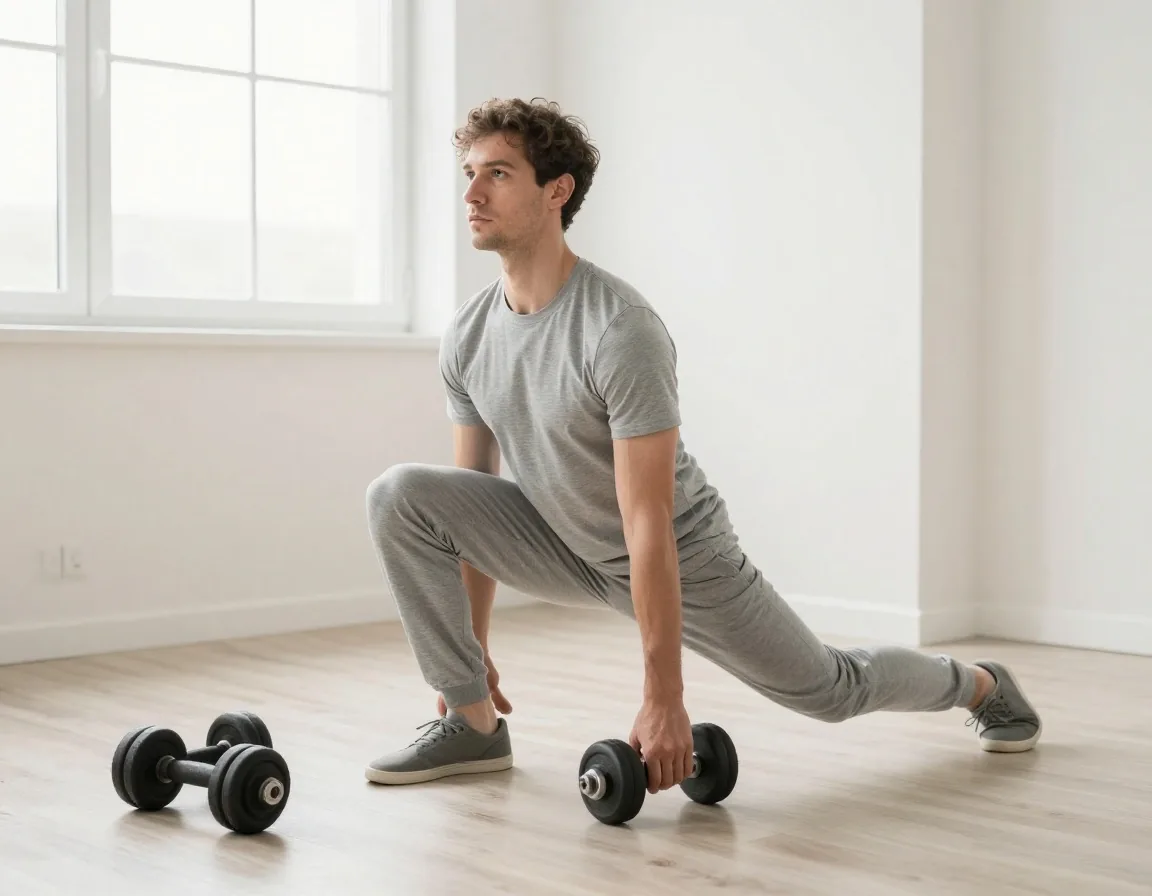
Form first, weight later. Add load only when the current repetition feels manageable for every set.
Strength basics without a complicated program
Strength work means using resistance against your muscles: bodyweight, bands, dumbbells or machines. None of those is better than the others for a beginner. The one that is already available to you is the one that works.
Start with a few big movements and cover each direction of effort once. Progress by adding a little weight or a repetition when the current one feels manageable. Two sessions a week is enough to make progress as a beginner.
Squat and hinge
Chair sits, box squats, then bodyweight squats. Hinges are the same shape as picking something off the floor.
Push and pull
Incline push-ups or wall push-ups, then rows with a band or a dumbbell. One of each per session is plenty.
Carry
Walk a short distance holding something heavy in one hand, then the other. The simplest full-body movement there is.
The one habit that pays first
Walking is underrated
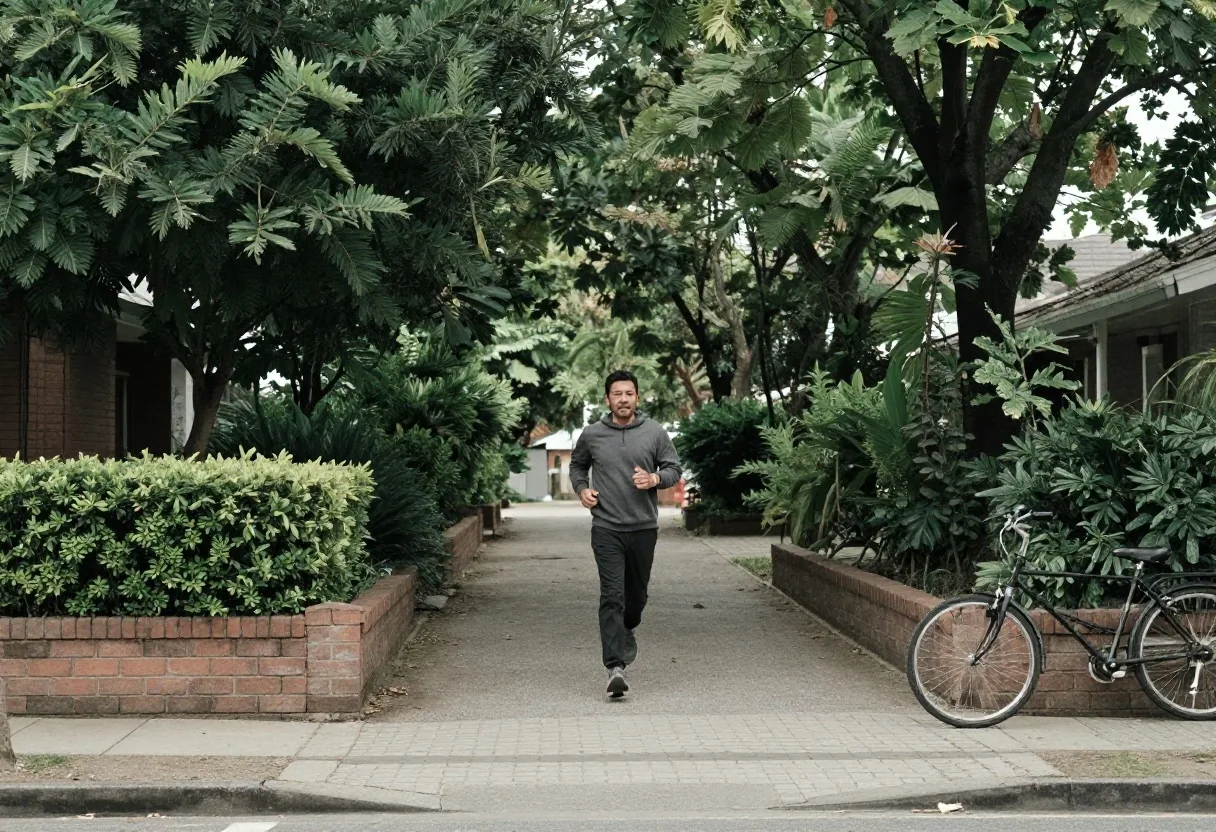
A brisk 20 to 30 minute walk most days improves cardiovascular fitness and mood, and it is easy to fit around work. If you sit for a living, a short walk after lunch is one of the highest-value habits on this site — it counts toward your weekly movement without special clothing or a plan.
Browse short habits for busy daysMost adults already have the cardio tool they need. It is the one they stop using when a week gets busy — which is exactly when it helps most.
Building walking into a working week
Walking counts as cardio and as recovery at the same time. You do not need to change clothes, warm up for ten minutes, or find a gym. Here is how four different weeks can look — pick the one closest to your week.
Desk-based week
Two 15-minute walks on work days — before the first meeting and after lunch. Same route is fine; the point is that it happens.
Easy to keep
Working from home
A short walk before you open anything, plus a ten-minute loop to break the afternoon. Getting outside early sets the tone for the day.
Easy to keep
Family or caring week
Walk with whoever needs company instead of adding a separate slot. A pram, a slow pace or a school run all count toward the total.
Fits around others
Very short days
When there is genuinely no time, walk one stop further and take the stairs. Small, repeated, still real movement.
Minimum viable week
Mobility, stretching and desk posture
If you sit for hours, your hips, upper back and neck take the strain. Five to ten minutes of daily mobility does more than one long session a week, because the position you hold all day is the one your body adapts to.
Movement variety matters more than any single stretch. Three movements cover most of what desk work costs you, and none of them needs equipment or a mat.
- Hip flexor stretch. Half-kneel beside a desk or sofa, tuck the pelvis slightly and hold. Repeat on the other side.
- Thoracic rotation. Kneel with one hand behind your head and turn the elbow toward the ceiling, slowly, both sides.
- Shoulder circles. Ten slow circles forward, ten back. Works well as a break between tasks rather than a separate routine.
Standing up every 45 minutes beats a perfect posture you never hold. Set a reminder you will actually keep, or tie the break to something that already happens — a kettle, a call ending, a page loading.
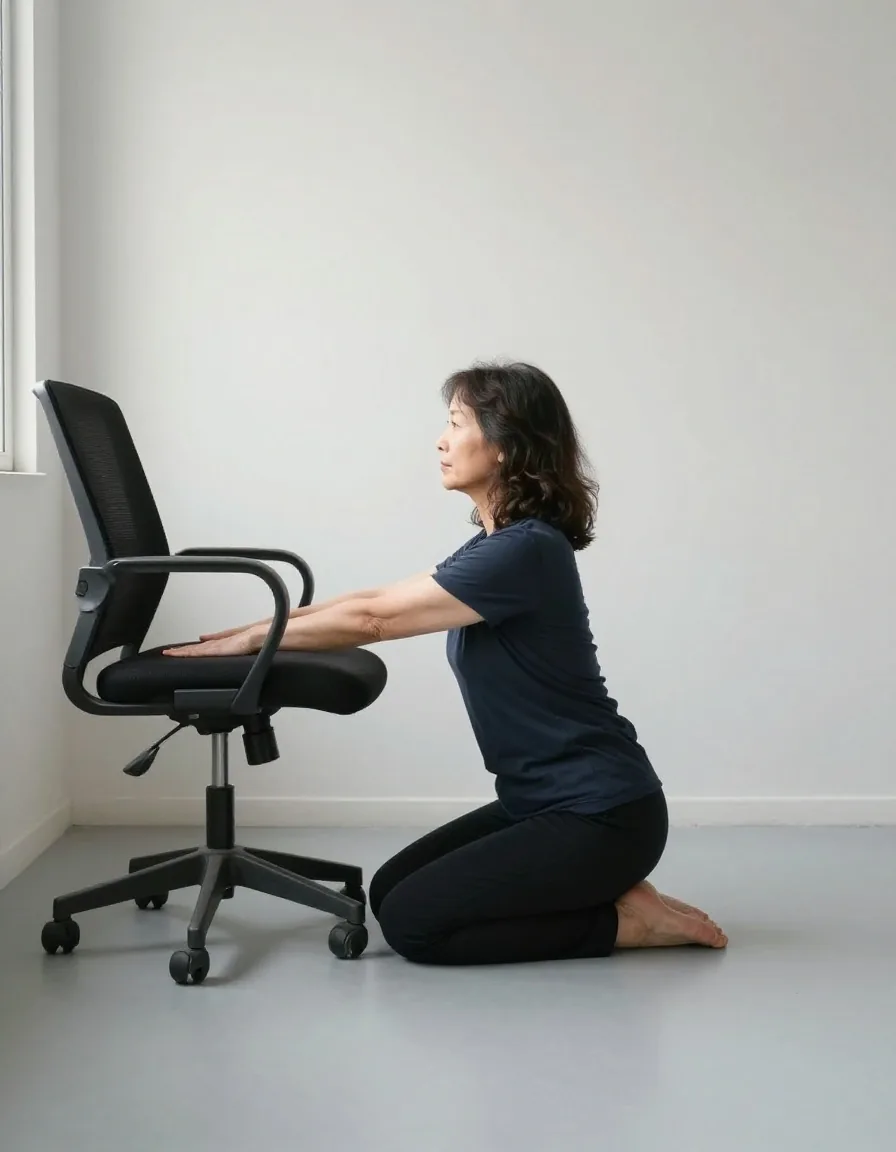
Sitting still for eight hours is a training load of its own. Mobility work is how you undo part of it — not how you earn the right to sit again.
How to progress without burning out
Progress is boring on purpose: add a small amount of weight, one repetition, or a few minutes, then repeat that for a couple of weeks before changing anything again.
Beginners often progress fast at first and then plateau. That is normal, and it is not a sign that you have done something wrong. Deload weeks, where you deliberately do less, are part of training rather than a failure.
If you dread every single session, your plan is too aggressive. Scale it back to a week you would happily repeat.
Recovery, rest days and sleep
Muscle adapts during recovery, not during the session. That means sleep, food and rest days matter as much as the training itself.
If your sleep is poor, your strength sessions will feel harder and your motivation will drop long before your muscles do. Rest days are not laziness; they are where the progress is stored.
Recovery has its own page. Worth reading alongside this one if your week feels harder than it should.
Training at different ages and starting points
A 25-year-old and a 60-year-old benefit from the same fundamentals: strength, movement, some cardio, recovery. The difference is the starting load and how quickly you progress, not the structure of the week.
Older adults gain comparatively more from strength work, because it protects muscle and bone that would otherwise decline quietly. Total beginners of any age should start lighter than they think and increase slowly — the first two weeks are for learning the movements, not for testing your limits.
If you are returning after a long break, expect to restart near where a beginner starts. That is quicker than it sounds, and it avoids the sore first week that ends most comebacks.
When to get individual guidance
A general routine cannot account for an injury or a specific condition. Some situations need a person, not a page.
-
Sharp pain during movement
A physiotherapist can identify what is being loaded and how to work around it while it settles.
-
A recent injury
Return-to-training timelines differ by injury. Guessing delays recovery more often than it speeds it up.
-
Dizziness or breathlessness in exercise
Worth a doctor's opinion before continuing, particularly if it happens at low effort.
-
Heart, joint or balance conditions
Exercise usually helps, but the plan needs adjusting. Ask what you can do, not whether you can.
A qualified trainer is also worth the money if you have never lifted before and want to learn the movements safely. That is a reasonable reason to pay someone — not to be told to try harder.
Questions readers send us
The three that come up most often when people start building a weekly movement routine.
How many days a week should I train?
Beginners can progress on two strength sessions plus walking. More is not automatically better if recovery suffers — the week you can repeat is worth more than the week you can only survive once.
Do I need a gym?
No. Bodyweight, bands and a pair of dumbbells cover the basics at home. A gym helps if you want heavier loads or equipment variety, but it is a convenience, not a requirement for progress.
Is soreness a sign it worked?
Not reliably. Soreness often reflects novelty rather than effectiveness — a new movement will make you sore whether or not it was the right dose. Progress shows up over weeks, not in how you feel the next morning.
What if I miss a week?
Start again at a slightly lighter load than where you stopped, and expect to be back within two or three sessions. Missing a week is normal life; treating it as a restart from zero is what ends routines.
Where to go next
Build the rest of the week around it
Movement is one part of a week that works. What you eat, how you sleep and how you handle stress all change how training feels — and how much of it you actually keep doing.
Fitness Mind Balance · 31 Triq il-Wied, Birkirkara BKR 9014, Malta · Monday to Friday, 9:00 AM – 6:00 PM
Educational guidance for adults, written and reviewed by the Fitness Mind Balance editorial team.
Questions readers ask